
ZED ZONE Best Backpack: Carry Weight
The best ZED ZONE backpacks by capacity and weight, how the grid and exoskeleton interact, and a packing list that stops you hauling junk.
Backpacks in ZED ZONE are not cosmetic. They are the difference between hauling a base's worth of materials in one trip and making three. They also tempt you into carrying too much, which slows you down and turns a manageable fight into a death.
The game has nine backpack entries, from a cloth bag to the big outdoor pack. This page ranks them by practical capacity, explains the weight system, and gives a packing list that fits a real run.
Official source: ZED ZONE on Steam ↗
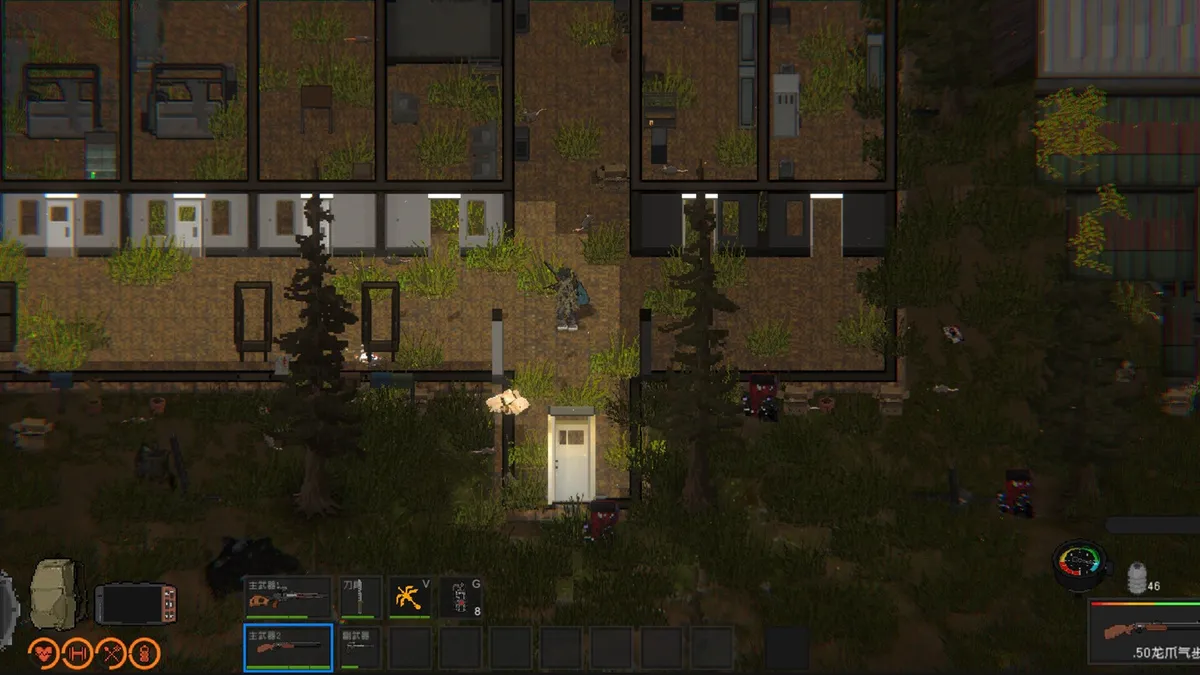
Overloading slows sprint and dodge recovery. Leave the third gun at base and carry food, bandages, and one spare magazine instead.
The backpack list
| Pack | Tier | Practical use |
|---|---|---|
| Big outdoor backpack | S | Main hauling pack; largest practical capacity |
| Oversized outdoor backpack | A | Strong all-round pack |
| Hiking backpack | A | Best early balance |
| Trekking backpack | B | Common starter |
| School backpack | B | Light and small |
| Fabric backpack | C | Early stopgap |
| Cloth bag | C | First hour only |
| Leather bag | C | Style over capacity |
| Small backpack | D | Replace immediately |
The exact slot counts can change with patches, but the order is stable: outdoor packs are the largest, school and trekking packs are mid, cloth and leather are small. The big outdoor pack is the one worth building a run around.
How the weight system works
Your inventory is a grid, not a weightless list. Every item occupies slots, and heavy items also affect movement. A pack with more slots lets you carry more things; your character's carry capacity limits how much weight you can move without penalty.
The exoskeleton changes the equation. When powered, it does not count against carry weight and adds 25 kg of armour capacity. That is a 1.0.4 change and it is the reason a late-game character can haul a base's worth of metal. Without power, the exoskeleton is a heavy shell that does the opposite.
Strength potions temporarily increase carry capacity. They are useful for a loot run, not for a boss fight; do not rely on them as a permanent solution.
What to carry
A practical solo loadout:
- Two weapons — one quiet, one loud. A rifle and a shotgun, or a rifle and a bow.
- One melee tool — fire axe or crowbar. Repairable, opens crates.
- Ammo — two magazines' worth for each gun, plus a reserve box.
- Medical — two bandages, one first aid kit, painkillers.
- Water — two bottles, one clean.
- Food — one cooked meal, one shelf-stable item.
- Utility — lockpick, repair kit, flashlight.
- Loot space — at least a third of the pack empty when you leave base.
The last point is the one players ignore. If you leave with a full pack, you have no room for the thing you actually came for. Leave the crafting materials at home unless the trip is a dedicated haul.
What to leave at base
- Duplicate guns — one backup is enough; three rifles are weight.
- Low-value scrap — metal fragments and wood are heavy and common.
- Decorative items — unless a recipe needs them.
- Every repair kit — carry one, store the rest.
- Quest items you already used — access devices and keys do not need to travel after they are spent.
A base chest with a sorted inventory saves more time than a bigger backpack. The base building guide→ covers storage layout.
Backpack vs vehicle
A vehicle is the real capacity upgrade. A truck bed or a car's storage holds more than any backpack, and it does not slow you down. The trade-off is fuel, noise, and the risk of losing the vehicle.
The practical pattern is: drive to a loot area, park outside the danger zone, take a backpack-sized load, and return. Do not drive into a horde to fill the trunk. The vehicles guide→ covers repair and fuel.
When to upgrade
Upgrade when you find a bigger pack, not when you can craft one. Backpacks are loot, not a crafting chain. A hiking pack is enough for the first week; an oversized outdoor pack is enough for Far Island; the big outdoor pack is for base-building hauls and late-game loot runs.
Do not scrap a smaller pack immediately. Keep one in a chest for a guest or a replacement after death. In co-op, a guest with a cloth bag will appreciate it.
Co-op packing
In a four-player group, one player can be the hauler. Give that player the biggest pack and the exoskeleton, and let the others carry ammo and medical. The hauler stays behind the point player, picks up the loot, and does not stop to fight.
The host's base is the only shared storage. Guests should not fill the host's chests with junk; use a separate chest or carry it out.
Common mistakes
- Carrying every calibre. Pick two and sell or store the rest.
- Hoarding food raw. Cooked meals weigh less per benefit and give buffs.
- Filling the pack before a boss. You need room for the drop.
- Ignoring the exoskeleton power state. A dead exoskeleton is a weight penalty.
- Using strength potions as a crutch. They expire.
FAQ
What is the biggest backpack?
The big outdoor backpack. The oversized outdoor pack is the next best and easier to find.
Does the backpack affect movement speed?
The pack itself does not, but the weight you put in it does. The exoskeleton adds capacity when powered.
Can I craft a backpack?
The backpack list is loot-based; there is no confirmed crafting recipe for the top-tier packs. Check the workbench before assuming.
How many backpacks should I keep?
One equipped, one spare in a base chest. More than that is storage clutter.
Sources
- ZED ZONE store page ↗ — inventory and exoskeleton features.
- ZED ZONE news hub ↗ — 1.0.4 exoskeleton weight change.
- ZED ZONE Community guides ↗ — backpack list.
- ZED ZONE on SteamDB ↗ — build history.
More ZED ZONE Guides
ZED ZONE console commands for 1.0: how to open the console, the four working command types, and a verified item and infected ID table.
ZED ZONE crafting in 1.0: the eight workbenches, the material chain, ammo press recipes, repair kits, and the order to unlock each station.
A ZED ZONE enemies guide: every infected type, the mechs and war machines, the Giant Mutant Lizard, and the tactics that actually work against each.
ZED ZONE Far Island guide: how to repair the boat, the ten new areas, the railway power loop, and a route that reaches Area 61 without wasting trips.
ZED ZONE farming in 1.0: planting pots, twelve crops, watering and fertilizer, mushroom caves, and the recipes that make a farm worth the space.
ZED ZONE food and cooking: clean water, the campfire and hob, meal buffs, preservation, food poisoning, and the best meals before a boss.
A practical ZED ZONE 1.0 guide: what changed, which route to take first, and the systems that decide whether your run survives week one.
How to play ZED ZONE in 1.0: the full keyboard map, mode selection, save rules, and the first-hour route that gets a new survivor to a stable base.