
ZED ZONE Weapon Mods: Slots and Builds
How ZED ZONE weapon mods work: the four slots, 40+ attachments, sight trade-offs, suppressor noise, and builds for rifles, shotguns, and SMGs.
ZED ZONE's mod system is one of its best systems and one of its least explained. A weapon has four attachment slots — barrel, sight, stock, and shell collector — and more than forty attachments across those slots. The right combination turns a cheap rifle into a quiet headshot machine; the wrong combination makes it slower, louder, and harder to aim.
The workbench screen shows the exact trade-offs before you install anything. Read it. A sight that adds range often cuts field of view, and a suppressor that lowers noise often costs damage or velocity.
Official source: ZED ZONE on Steam ↗
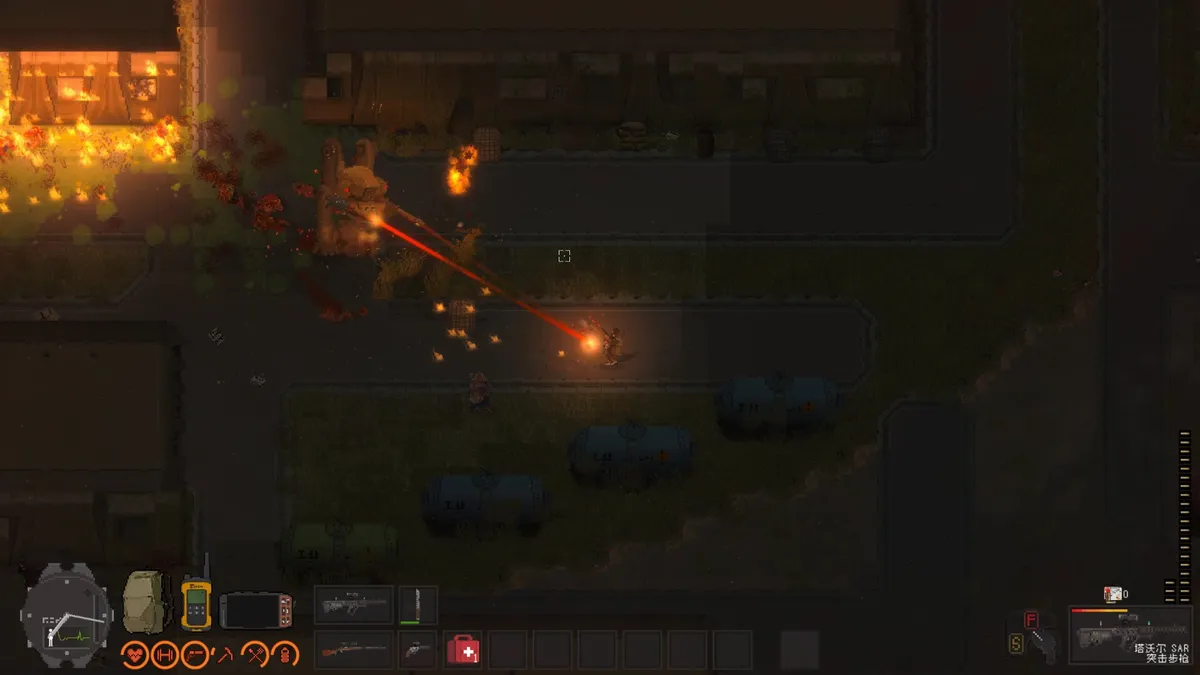
A thermal scope is a scout tool, not a room-clearing sight. Keep a red dot in the bag and swap when the fight moves indoors.
The four slots
| Slot | What it changes | Best used for |
|---|---|---|
| Barrel | Noise, velocity, damage, recoil | Suppression or long-range accuracy |
| Sight | Zoom, field of view, thermal | Target acquisition |
| Stock | Recoil, handling, movement speed | Automatic weapons |
| Shell collector | Recovered casings | Ammo economy on long runs |
Not every weapon accepts every slot. Pistols usually take a barrel and a sight; rifles take all four; bows and crossbows use their own ammo types and do not take firearm attachments.
Barrel attachments
The barrel slot is where you decide whether the gun is a neighbourhood alarm or a quiet tool.
- Suppressors — the Benelli, GMtech, Lunar, Omega, and handmade models all reduce noise. The trade-off is usually damage, velocity, or both. A suppressed MP5-K is still louder than a bow, but it is quiet enough to clear a house without pulling the street.
- Extended barrels — increase velocity and range, often at the cost of handling. Good on hunting rifles, bad in a corridor.
- Short barrels — improve handling and movement speed, reduce velocity. Good on shotguns and SMGs.
- Calibre-specific suppressors — 9mm, 5.56, 7.62, .300, and .22 versions exist. Install the matching one; a 9mm can on a 5.56 rifle is not a universal fit.
The workbench lists noise as a number. A rifle at noise 36 is already loud; a suppressor might take it to the high 20s. The bow at noise 4 is in a different category. Do not expect a suppressor to make a rifle silent.
Sights
The sight slot has the clearest trade-offs in the game. The workbench example for the Winchester 70 shows a high-magnification thermal sight with:
- 536 / 1500 uses remaining — sights have durability.
- -20% spread — better accuracy.
- -25% recoil — easier follow-up shots.
- +80% range — longer effective distance.
- -50% field of view — tunnel vision.
- Thermal imaging — sees heat through darkness and smoke.
- 1.5x scope effect — a modest zoom on top of the thermal.
That is a fantastic hunting sight and a terrible house-clearing sight. The -50% field of view means a Breaker can enter your peripheral vision and you will not see it.
Common sight families:
- Red dot / holographic — fast acquisition, no zoom, minimal penalty. The default for indoor work.
- 2x / 4x — a compromise for town streets and mid-range.
- PA 6x / Hunter 8x — hunting and precision; poor close-range awareness.
- Thermal (wide-angle and high-magnification) — night and smoke utility, expensive to use, limited durability.
- Lasers (green, red, blue) — hip-fire accuracy and target marking; visible to enemies in some contexts.
For a general rifle, a red dot or a 2x is the practical choice. For a hunting rifle, a 6x or 8x. For a suppressed VSS, a thermal sight is a night-clearing tool.
Stocks
Stocks affect recoil, handling, and movement speed:
- Lightweight / portable stocks — better movement, less recoil control.
- CTR tactical stocks — the balanced choice for automatic rifles.
- Wooden stocks — cheap, stable, heavy.
- Integrated suppressor stocks — combine two jobs, usually at a higher cost.
- Pressurised gas tanks / electric air pumps — air-gun specific; improve pumping and shot consistency.
On a full-auto rifle, a stock is not optional. The difference between a 30-round burst that lands and one that sprays the ceiling is usually the stock and the player's trigger discipline.
Shell collectors
The shell collector recovers spent casings, which matters if you reload ammunition at the ammo press. It is a small economy upgrade, not a combat upgrade. Put it on a gun you fire a lot, and do not sacrifice a barrel or stock slot for it on a weapon that needs suppression or control.
Magazine attachments
Magazines are their own attachment family, often listed separately from the four workbench slots. Capacity by calibre:
| Calibre | Capacities |
|---|---|
| .22 | 10, 12, 20, 30, 55, 110 |
| 9mm | 17, 30, 40, 60 |
| 5.56 | 25, 30, 60, 200 |
| 7.62 | 30, 40, 75 |
| .300 | 5 |
A 60-round 5.56 magazine turns an AR-15 into a suppressive tool, but it adds weight and reload time. The 200-round 5.56 magazine is for the M249 and similar belt-fed weapons; do not expect it to fit a rifle.
Builds that work
Quiet town rifle
- Base: AR-15 or VSS
- Barrel: 5.56 or 9x39 suppressor
- Sight: red dot or 2x
- Stock: CTR tactical
- Collector: optional
This build clears buildings without pulling the block. The VSS is already quiet; the AR-15 needs the suppressor to compete.
Hunting rifle
- Base: Winchester 70 or Ruger M77
- Barrel: extended or suppressed
- Sight: Hunter 8x or PA 6x
- Stock: wooden or lightweight
- Collector: yes, if you reload .300
The 8x sight is for deer and specials at distance. Do not carry this build into a house.
Close-quarters shotgun
- Base: Remington 870
- Barrel: short
- Sight: red dot
- Stock: lightweight
- Collector: yes
The shotgun does not need a suppressor; it is already a loud problem solver. Short barrel and red dot make it fast in a doorway.
Suppressed SMG
- Base: MP5-K or B&T MP9
- Barrel: 9mm suppressor
- Sight: red dot
- Stock: CTR short
- Collector: yes
This is the best early indoor build. It is cheap, quiet enough, and the 9mm ammo is common.
Boss rifle
- Base: GM6 Lynx or Winchester 70
- Barrel: extended
- Sight: 6x or 8x
- Stock: wooden or recoil-control
- Collector: optional
Boss fights are about sustained precision. The Lynx does 1020 damage per shot; the Winchester does 297 with a faster cycle. Bring ammo.
Durability and repair
Attachments have their own durability. The thermal sight in the workbench example had 536 of 1500 uses left. When an attachment breaks, it stops providing its bonus. Check the workbench before a boss fight, not during one.
Weapons also degrade and can jam. Carry a firearm repair kit and an item repair kit to recharge it. The crafting guide→ covers the repair chain.
FAQ
How many mod slots does a gun have?
Four: barrel, sight, stock, and shell collector. Pistols may accept fewer; bows and crossbows do not use firearm attachments.
Do suppressors make guns silent?
No. They reduce noise, but a suppressed rifle is still louder than a bow. Noise 4 is silence; noise 30 is not.
Do sights break?
Yes. Sights have durability and stop working when it runs out.
Can I move a mod between guns?
Yes, if the slot and calibre match. Check the workbench prompt; some attachments are weapon-specific.
Sources
- ZED ZONE store page ↗ — four mod slots, 40+ attachments.
- ZED ZONE news hub ↗ — 1.0.4 sight price changes.
- ZED ZONE Community guides ↗ — attachment tables.
- ZED ZONE on SteamDB ↗ — build history.
More ZED ZONE Guides
ZED ZONE boss guide: the three Area Guardians, the Supreme Intelligence's three phases, the Giant Mutant Lizard, and the gear each fight demands.
ZED ZONE console commands for 1.0: how to open the console, the four working command types, and a verified item and infected ID table.
ZED ZONE crafting in 1.0: the eight workbenches, the material chain, ammo press recipes, repair kits, and the order to unlock each station.
A ZED ZONE enemies guide: every infected type, the mechs and war machines, the Giant Mutant Lizard, and the tactics that actually work against each.
ZED ZONE Far Island guide: how to repair the boat, the ten new areas, the railway power loop, and a route that reaches Area 61 without wasting trips.
ZED ZONE farming in 1.0: planting pots, twelve crops, watering and fertilizer, mushroom caves, and the recipes that make a farm worth the space.
ZED ZONE food and cooking: clean water, the campfire and hob, meal buffs, preservation, food poisoning, and the best meals before a boss.
A practical ZED ZONE 1.0 guide: what changed, which route to take first, and the systems that decide whether your run survives week one.