
ZED ZONE Wiki: Systems, Items and Maps
A compact ZED ZONE wiki for 1.0: item categories, weapon counts, enemy families, map areas, modes, save rules and the guides that explain each system.
This is a reference index, not a walkthrough. It collects the numbers and categories that are easy to lose in the middle of a run, then points to the guide that explains how to use them. Everything here is checked against the 1.0 build and the official patch notes; values that come from the in-game item list are marked as such.
Official source: ZED ZONE on Steam ↗
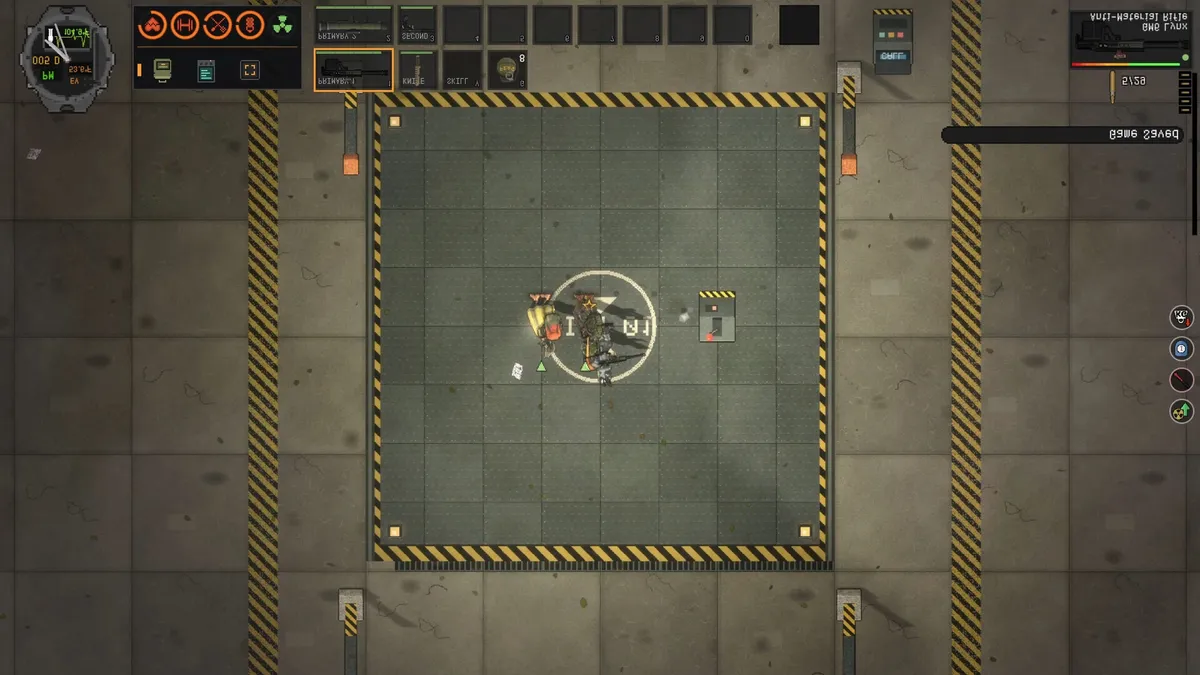
Several benches and items were renamed for 1.0. Search the crafting menu by the label you see in game, not the label from a 2023 screenshot.
Release and platform facts
| Field | Value |
|---|---|
| Full release | November 5, 2026 (store page); November 6, 2026 UTC+8 (announcement) |
| Developer / publisher | Leven Liu / INDIECN |
| Price at launch | $11.99 list, $7.19 with the two-week 40% discount |
| Platform | Windows PC, Steam |
| Modes | Single-player, online co-op (up to 8), LAN co-op, Horde, Cataclysm |
| Input | Keyboard and mouse, full controller support |
| Workshop | Supported |
| Cloud saves | Supported |
The game is a 2D top-down survival game. You start from a crashed helicopter on a quarantined island, scavenge, build, and push toward the cause of the outbreak. The camera is top-down but the combat is real-time: aim matters, noise matters, and a single Breaker can end a run.
Item categories at a glance
The item list is large. These are the category counts from the current data, useful when you are deciding what a new container can possibly hold:
| Category | Entries | What it covers |
|---|---|---|
| Guns | 100 | Pistols, SMGs, rifles, shotguns, LMGs, bows, crossbows, air guns, launchers |
| Melee | 60 | Axes, hammers, blades, blunt weapons, spears, fishing rods |
| Resources | 65 | Wood, metal, cloth, electronics, chemicals, components |
| Ammo | 30 | 12 gauge, 9x19, 5.56, 7.62, .22LR, .300 Magnum, .50 BMG, 40mm, 25mm |
| Magazines | 40 | Pistol, rifle, drum, and belt variants |
| Weapon barrels | 22 | Suppressors, long and short barrels, air-gun valves |
| Weapon sights | 14 | Red dots, holographics, optics, lasers, thermal |
| Weapon stocks | 13 | Wood, tactical, lightweight, air tanks |
| Backpacks | 10 | Cloth, school, hiking, trekking, oversized outdoor, big outdoor |
| Traps | 30 | Spikes, mines, animal traps, fireworks launchers |
| Throwables | 20 | Frag, molotov, bottle bomb, tin-can bomb, flash |
| Food and drink | 50 | Meat, fish, canned food, soda, alcohol, cooked meals |
| Medical | 9 | Bandage, first aid kit, painkiller, blood bag |
| Potions | 10 | Stamina, health, strength, antitoxic |
| Masks | 10 | Homemade, N95, gas mask, cheap mask |
The counts are not a promise that every entry is craftable. Some are loot-only, some are variants of the same base weapon, and some are legacy entries. The weapons catalogue→ groups them by family so you can see what actually competes for a slot.
Weapons, in one paragraph each
Melee is the quiet, repairable backbone. The item list gives the trident 218 damage, the Katana "Ji" 198, the golf club 148, the mace bat 118, and the fire axe 88. Speed and range differ enough that raw damage is not the whole story: the spear family reaches 2.0–2.3 range, while the katana sits around 0.88–1.2. Melee weapons wear down and need specific parts to repair. The full table is in the weapons list→.
Bows and crossbows trade rate of fire for silence. The compound bow lists 248 damage at 60 RPM and noise 4; the compound crossbow lists 320 damage, 40 RPM, and noise 8. The airbow is the odd one: 380 damage, 240 projectile speed, noise 12. These are the weapons that let you clear a building without ringing the dinner bell.
Pistols cover the cheap end of the ammo spectrum. The Ruger 10/22 is a rifle, but the same .22LR logic applies to the Pathfinder revolver and Ruger MK IV: low damage, low noise, plentiful ammo. The 2011 Combat Master lists 128 damage at 400 RPM with 2.4 offset, which is the most accurate starter pistol on paper.
Rifles are where the damage curve jumps. The AR-15 lists 90 damage at 800 RPM, the AK-47 108 at 500, the ARX100 108 at 750, and the GM6 Lynx 1,020 at 120. The M249 and RPK sit in the LMG row with 200- and 75-round capacities. The trade is weight, noise, and ammo burn.
Shotguns are panic buttons. The Remington 870 lists 282 damage, the double-barrel 360, the triple-barrel 350, and the striker 300 with a 12-shell capacity. They are excellent indoors and mediocre at range because of the spread.
The best weapons guide→ turns these numbers into stage-by-stage picks; the tier list→ ranks them by role.
Enemy families
The bestiary is not one list of zombies. It has five practical families:
- Common infected. Slow, noisy, dangerous in numbers. Dormant hordes lie on the ground near hospitals and in the wild until noise or an attack wakes them.
- Special infected. Spitters, blasters, crawlers, splitters, boomers, screamers, and T-variants. Each one changes the fight: area denial, ranged acid, or a scream that pulls a larger pack.
- Mutants. Breakers are the headline: fast, heavy damage, found at high-risk military and cellar locations. Juggernauts arrive in groups and share a host. Fan Blades are artificial mutations.
- Robots. Spider Robots fire a wall-piercing laser with two hitboxes, wait about four seconds between shots, and punish standing still. War Machines fire an incendiary laser plus a machine gun, and their legs deal small area damage.
- Guardians. The named Far Island bosses: Augmented Security Captain, Corpse Amalgam, Factory Warden, and the final three-phase boss in Area 61.
The enemies guide→ covers behaviour and counters; the boss guide→ covers the named fights.
Map structure
The world is now two islands plus an underground endgame:
- Main island. The starting island from Early Access, with rebuilt roads, a new tutorial spawn, towns, military checkpoints, hospitals, and the boat yard.
- Far Island. Ten new areas: port, RNA Lab, shopping mall, armory, automated factory, nuclear plant, old airport, military camp, and more. The railway connects them.
- Area 61. Surface facility plus underground, unlocked with three access devices from the guardians.
- Underground levels. The PDA shows the current underground layout, stairs, and exits when you are below ground.
The Far Island guide→ has the route order and the railway rules.
Modes and saves
| Mode | Unlock | Death rule | Score |
|---|---|---|---|
| Standard | Default | Return to last save | None |
| Cataclysm | Clear Standard | Respawn where you died | Consecutive days survived |
| Horde | Default | Wave restart / run ends | Waves survived |
| Co-op | Default | Downed, revive by teammate | Shared world |
Standard and Cataclysm use the same world but different death rules. Cataclysm adds a horde night every five days and a calamity enemy every seven days that must be killed within a time limit. Horde is a separate defense mode around a trader's RV camp, with airdrops between waves and meta progression that carries between runs.
Save files live in %USERPROFILE%\AppData\LocalLow\LevenLiu\ZEDZONE. Characters and worlds are separate in 1.0, so a character can move between worlds. The save location guide→ covers backups and co-op saves.
Skills, crafting and base systems
Skills are split into Melee, Firearms, and Fitness, with six directions, more than twenty paths, and sixty-plus skills. Points come from vials made from mutant tissue and special infected flesh. The PDA also grants active skills: Grapple, CAS System, Focused Laser Cannon, and Western Gunslinger.
Crafting runs through eight station types: simple workbench, advanced workbench, ammo press, simple lathe, chemical bench, pharmaceutical bench, canning station, and mold workbench. Power comes from generators and storage modules; the electric fence needs a Stirling generator.
Base building is voxel-based: wood, stone, metal, glass, and hay blocks, multi-storey shells, stairs, roofs, and furniture on upper floors. A room counts as indoors when it has four walls, a roof, and a closed door, which matters for rain and for the new indoor detection.
What to read next
The ZED ZONE guide→ is the routing table if you are not sure where to start. New players should read the beginner guide→; returning players should read Far Island→. If you are hosting, read multiplayer→ before you send a room code.
FAQ
Is this an official wiki?
No. It is an independent guide site. The official sources are the Steam store page, the news hub, and the in-game PDA. Values that come from the item list can change between patches.
How many weapons are in ZED ZONE?
The item list carries about 100 gun entries and 60 melee entries, including variants. The practical count is smaller because many entries are handmade versions or colour variants of the same base weapon.
Does the game have achievements?
The Steam store page and the 1.0 announcement do not list achievements, and the community hub did not expose an achievement list at the time of writing. This site does not publish an achievement guide without a verified list.
Are codes in the game?
There are no redeem codes. The two things players call "codes" are console item IDs and six-character co-op room codes. Both have their own guides.
Sources
- ZED ZONE store page ↗ — release facts and feature list.
- ZED ZONE news hub ↗ — 1.0 content and patch notes.
- ZED ZONE Workshop ↗ — mod support.
- ZED ZONE on SteamDB ↗ — build and patch history.
More ZED ZONE Guides
ZED ZONE boss guide: the three Area Guardians, the Supreme Intelligence's three phases, the Giant Mutant Lizard, and the gear each fight demands.
ZED ZONE console commands for 1.0: how to open the console, the four working command types, and a verified item and infected ID table.
ZED ZONE crafting in 1.0: the eight workbenches, the material chain, ammo press recipes, repair kits, and the order to unlock each station.
A ZED ZONE enemies guide: every infected type, the mechs and war machines, the Giant Mutant Lizard, and the tactics that actually work against each.
ZED ZONE Far Island guide: how to repair the boat, the ten new areas, the railway power loop, and a route that reaches Area 61 without wasting trips.
ZED ZONE farming in 1.0: planting pots, twelve crops, watering and fertilizer, mushroom caves, and the recipes that make a farm worth the space.
ZED ZONE food and cooking: clean water, the campfire and hob, meal buffs, preservation, food poisoning, and the best meals before a boss.
A practical ZED ZONE 1.0 guide: what changed, which route to take first, and the systems that decide whether your run survives week one.